

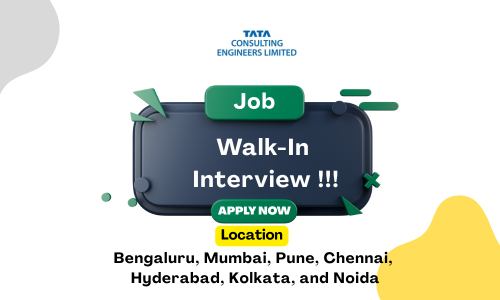
Tata Consulting Engineers Walk-In Interview on Jan 31st for Multi-City Roles is a significant career event for engineering professionals. Tata Consulting Engineers Limited (TCE) is hosting this massive recruitment drive to find skilled talent for various engineering sectors. This walk-in drive aims to fill positions across multiple cities, offering a chance to join one of India’s most respected engineering consultancies.
About Tata Consulting Engineers Limited
Tata Consulting Engineers Limited is a top-tier engineering consultancy firm in India. Established in 1962, the company provides end-to-end engineering solutions. They work in sectors like power, infrastructure, mining, and chemicals. TCE manages over 12,000 projects in 65 countries. It is a part of the Tata Group, known for its strong values and commitment to excellence. Tata Consulting Engineers Walk-In Interview on Jan 31st for Multi-City Roles
Details of Tata Consulting Engineers Walk-In Interview on Jan 31st for Multi-City Roles
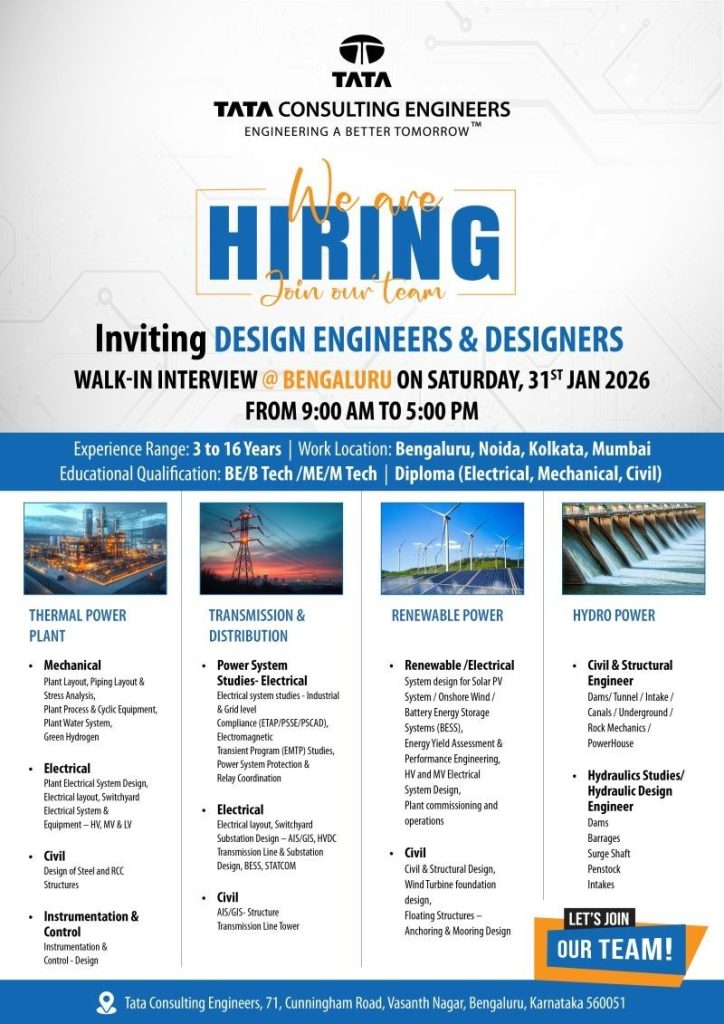
The Tata Consulting Engineers Walk-In Interview on Jan 31st for Multi-City Roles covers various locations and job profiles. Here are the primary details you need to know:
- Interview Date: January 31st, 2026
- Experience Required: 4 to 13 years (Experienced Professionals)
- Education: BE / B.Tech / ME / M.Tech in relevant engineering branches
- Job Locations: Bengaluru, Mumbai, Pune, Chennai, Hyderabad, Kolkata, and Noida
Targeted Engineering Segments
The recruitment drive focuses on several key business segments:
- Thermal Power: Design roles for plant layout, piping, and process equipment.
- Renewable Energy: Focus on Solar PV, Wind, and Battery Energy Storage Systems (BESS).
- Transmission & Distribution: Substation design (AIS/GIS), HVDC, and power system studies.
- Hydro Power: Civil and structural engineering for dams, tunnels, and hydraulic designs.
Job Positions and Descriptions
During the Tata Consulting Engineers Walk-In Interview on Jan 31st for Multi-City Roles, the company is looking for candidates for the following positions:
1. Mechanical Design Engineer (Power)
- Role: You will create plant layouts and piping designs.
- Skills: Knowledge of stress analysis and cyclic equipment is necessary.
- Task: You must ensure the mechanical integrity of power plant systems.
2. Electrical Design Engineer (T&D)
- Role: You will design switchyards and substations.
- Skills: Proficiency in ETAP, PSSE, or PSCAD for system studies.
- Task: You will manage relay coordination and electrical system protection.
3. Civil and Structural Engineer
- Role: You will design RCC and steel structures for industrial projects.
- Skills: Experience with wind turbine foundations or dam structures.
- Task: You must perform structural analysis to ensure safety and stability.
4. Solar/Renewable Energy Specialist
- Role: You will lead energy yield assessments for solar and wind projects.
- Skills: Design experience with BESS and hybrid energy systems.
- Task: You will optimize the performance of renewable energy plants.
Why Join Tata Consulting Engineers?
Participating in the Tata Consulting Engineers Walk-In Interview on Jan 31st for Multi-City Roles offers many benefits: Tata Consulting Engineers Walk-In Interview on Jan 31st for Multi-City Roles
- Brand Value: You become a part of the prestigious Tata Group.
- Project Variety: You get to work on global, large-scale engineering projects.
- Work Culture: TCE provides a stable work environment with a focus on learning.
- Career Growth: The company offers clear paths for advancement for experienced engineers.
Top 10 Interview Questions and Answers
Prepare these questions for the Tata Consulting Engineers Walk-In Interview on Jan 31st for Multi-City Roles to improve your chances of selection.
Q1. What is GD&T, and why is it used in design?
Q2. How do you improve the thermal efficiency of a power plant?
Q3. What are the key differences between AIS and GIS substations?
Q4. What is the function of a surge tank in a hydro power plant?
Q5. Explain the 3-2-1 principle in fixture design.
Q6. What factors do you consider for a Solar PV system design?
Q7. What is the difference between Stress and Pressure?
Q8. How do you perform Load Flow Analysis in a power system?
Q9. What are the common defects in RCC structures?
Q10. Why is grounding important in electrical systems?
Important Instructions for the Walk-In Drive
To succeed in the Tata Consulting Engineers Walk-In Interview on Jan 31st for Multi-City Roles, follow these steps:
- Documents: Carry three copies of your updated resume. Bring your educational certificates and experience letters. Tata Consulting Engineers Walk-In Interview on Jan 31st for Multi-City Roles
- Registration: Check if the company requires pre-registration on their official portal.
- Time: Reach the venue at least 30 minutes before the scheduled time.
- Attire: Wear professional business formal clothes. Tata Consulting Engineers Walk-In Interview on Jan 31st for Multi-City Roles
Top 10 Job Vacancy for Trainee & Maintenance Engineer and More in Bengaluru – at Volvo Group
Get instant updates about premium job alerts: 👉 Click to Join WhatsApp Group